Showing posts with label Grooming-Coupons-for-Petsmart-2016. Show all posts

Friday, August 26, 2016

Top Pet Health Tips for Autumn

#3. There is a fungus amongus!
In some regions of the country, fall is just as wet as spring. That means that more mushrooms dot backyards and forest floors. While most mushrooms are perfectly safe, there’s a small percentage that are highly toxic to our furry friends (and to us!). Check out this handy guide from the ASPCA to stay informed about toxic mushrooms, and if you think your pet has gobbled up a toxic mushroom, contact the ASCPA Animal Poison Control Center immediately!

#4. Feed your pet right
It’s getting colder out there, and cool temperatures mean more energy is needed to stay warm. You’ll probably need to feed your pet a bit more food – food generates body heat, so pets who spend a lot of time exercising outdoors need to eat more than in the summer. However, don’t start dishing out more food just yet – make sure you talk to your veterinarian first, as every pet’s needs are different.
#5. Watch out for antifreeze toxicity
In preparing for the winter months ahead, people tend to use fall to winterize their cars. This often involves changing fluids such as antifreeze, which can be deadly for pets. Consider this: one to two teaspoons of the stuff can kill a 10-pound dog! Less can kill a 10-pound cat.1
Part of the problem is ethylene glycol, a substance in antifreeze that has a sickly-sweet smell that entices pets to lap it up. That’s why it’s important to clean up spills immediately and make sure your pets steer clear of the garage while you’re working on your vehicle. Read our in-depth article to learn more about the dangers of antifreeze and other automotive fluids.
#6. Beware chocolate and hearty foods
The fall and winter parallel our holiday seasons, when we ramp up our intake of hearty, heavy foods and sweets. It’s important to make sure your pets don’t get into any foods that can make them sick; for dogs, this means chocolate, grapes, and raisins are off limits because they are toxic.
Just because some foods aren’t technically considered toxic to pets doesn’t mean they’re safe. Rich, high-fat foods can cause stomach problems such as diarrhea and gastroenteritis and even more serious conditions like pancreatitis. Also, think about small food items that can be choking hazards, like turkey bones around Thanksgiving.  Talk to your veterinarian to make sure you know what’s safe and what’s not.  
#7. Be careful with decorations
Holidays mean decorations! But be careful about leaving irregularly shaped objects and trinkets around the house. While you might like to get into the seasonal spirit, dogs and cats do too – in the form of sampling, say, decorative gourds or other fall props. Eating strange objects can be dangerous and lead to foreign body obstruction. Learn what to watch for, including symptoms, in our in-depth article about foreign body ingestion.
Step into savings with grooming specials and promotions at PetSmart's grooming salon. Don't miss these pet grooming coupons and deals. Get Up To 50% OFF Treat of The Week + FREE Shipping W/ PetSmart Coupon. Save now! 

Saturday, August 13, 2016

Cat Grooming Basics

When it comes to keeping clean and tangle free your cat will need a helping hand from you. We share our top grooming tips and advice with you.

But as gung-ho as your cat is about keeping itself groomed and clean, the truth is that it could still use a bit of help from you.
Grooming is about more than just keeping your cat looking good. Grooming your cat on a regular basis will also help you to keep an eye on its health. And grooming your cat can even help to prevent feline health issues such as digestive problems caused by hairballs. Regular grooming can also help to improve the health of your cat’s skin and coat.

GETTING STARTED

If you’re already a cat owner, this probably goes without saying: Don’t just snatch up your cat one day and commence to grooming if you’ve never groomed the cat before. The outcome is likely to be unpleasant for the both of you.
Instead, slowly accustom the cat to the process of grooming.
Pick a time when the cat is relaxed and content – after eating, perhaps. Then start with short grooming sessions of maybe 5 to 10 minutes. Pet and praise the cat as you’re grooming, and maybe even offer a treat at the end of the session. And if the cat begins to show signs that it’s none too happy about what’s happening, stop for now. You can try it again later.
With time, the cat will become accustomed to the process, and will likely come to enjoy it.

BRUSHING BASICS

Regular brushing offers benefits such as dead hair and dirt, and removing or preventing mats and tangles. But do it right, or you’ll end up with a cantankerous kitty on your hands!
Always brush in the direction that the hair naturally lays, never against the ‘grain.’ And be extra gentle around the belly and chest.
For shorthaired cats:
  • Start with a fine-toothed metal comb. Run it through the cat’s fur from head to tail tip. Watch for small pepper-like specks that could indicate the presence of cat fleas.
  • Use a bristle or soft rubber brush next to remove loose hair.
For longhaired cats:
  • Start with a wide-toothed comb to remove debris that may be caught in the cat’s coat. Carefully untangle any knots.
  • Next use a wire brush or a bristle brush to remove loose hair.
  • Consider using a toothbrush to brush around the cat’s face.
And if you encounter matting in the cat’s fur, don’t try to cut it out; one or both of you may end up getting hurt.
Brushing twice a week should be plenty for most shorthaired cats, while a longhaired cat may need brushing every day.

BATH TIME (SAY IT ISN’T SO)

Does the idea of giving your cat a bath send shivers of fear down your spine? Understandable! It’s well known that most cats aren’t particularly fond of water. You may even have been witness to a vivid demonstration of this fact in times past.
Luckily, cats don’t often need the help of a full-blown bath.
But on occasion, your cat’s coat might become sticky or dirty to a degree that the old tongue-bath just isn’t going to cut it. So you’ll have to get involved. Fortunately, though, bath time doesn’t have to be a time of terror for the both of you – if you do it right:
  • Start by making the water temperature pleasant. It should be warm – not hot, and not cold.
  • Use a shampoo that’s made specifically for use with cats, and labeled accordingly.
  • Use a sink or tub in which you’ve placed a rubber bath mat, filled to a depth of just 3 or 4 inches.
  • Gently wet the cat down using a spray hose, but DO NOT spray or pour water directly on the cat’s head – you don’t want to spray or pour into the cat’s eyes, ears or nose. If you don’t have a spray hose, use an unbreakable pitcher.
  • Start at the cat’s head, and gently work in the shampoo from head to tail.
  • Rinse gently but thoroughly, making sure that all the shampoo is rinsed out. Again, be sure to avoid spraying or pouring water directly on the cat’s head.
  • Gently pat dry with a large towel.
And one last tip: If your cat’s nails need clipping, do it BEFORE bath time!

PEDICURE, PLEASE

Getting your cat to accept having it’s claws trimmed by you really shouldn’t be too difficult, IF you approach it properly.
Start out by spending some time just training your cat to be comfortable and accepting of having her feet handled. Begin to massage its feet on a daily basis. Do that by running your hand along its leg, and then very gently pressing with your thumb on the pad of each toe, causing the claw to extend. After a week or two the cat will likely become comfortable with its daily foot massage.
Once the cat is comfortable with the massaging, it’s OK to clip. Use a quality, sharp clipper or nail scissors specifically designed for use on cats. Cut parallel to the flat of the claw, and clip off only the white tip. Be VERY careful to avoid the quick, which usually appears as a pinkish area that you can see through the translucent claw.

IT’S NICE TO BE NEEDED

Compared to certain other pets, cats are relatively low maintenance – a nice perk for cat lovers. But like all of us, your cat could use a helping hand now and then. Independent creature though your cat may be, it still needs your help in remaining happy and healthy.
And that’s kind of a perk, too, wouldn’t you agree?

Friday, July 8, 2016

Why Dog Food Is For Dogs and Cat Food Is For Cats

Ever wondered why some pet foods sport cats on the packaging… while others only offer us dogs?
It may sound silly to you, but plenty of people ignore the pics and labels altogether, apparently laboring under the illusion that as long as there’s a furred and four-legged creature on the side of the bag or can it’s bound to be acceptable fare for either species.
Not so. Which brings me back to my original question:
Q: Did you ever wonder what, exactly, separates a cat food product from its canine varietal?
A: It’s an important question not just because there are yahoos out there willing to feed their pet anything or because you may one day find yourself in a pinch (Can I feed Fluffy some of Fido’s food or do I have to go shopping right now?), but also because understanding the differences can help teach you a thing or two about your pets’ nutritional needs.
Consider the major points that differentiate dog foods from their feline counterparts:

#1 Palatability

Dogs and cats perceive food differently. For example, among other differences, cats don’t have the ability to taste anything sweet. Their reduced range for what they consider palatable helps explain why dog food doesn’t tend to attract cats as much as cat food does dogs.

#2 Vitamin A

Dogs have the ability to turn beta carotene into Vitamin A, a feat cats’ bodies can’t manage. That’s why Vitamin A must be supplied in cat food. While plenty of dog foods may contain additional vitamin A, they aren’t necessarily formulated to offer the amounts a cat requires for a lifetime of optimum health. A variety of non-specific symptoms and disease states can result when cats don’t receive sufficient levels of Vitamin A in their food.

#3 Taurine

Taurine is considered an essential amino acid for cats. Therefore, all cats require it. Dogs, on the other hand, can make their own taurine, which is why many dog foods are deficient in this nutrient. If a cat is fed a canine diet lacking sufficient levels of taurine, blindness and a heart disease called hypertrophic cardiomyopathy are the most common outcomes.
Note: Taurine deficiency also happens when cats eat a fish-only diet, since fish meat is largely deficient in this amino acid. Which is why you might’ve heard that tuna is "bad" for cats (but isn’t unless you’re not feeding an otherwise balanced diet).

#4 Arachidonic acid

Arachidonic acid is a fatty acid dogs can build themselves. Cats, on the other hand, require the real thing. Cats who eat dog foods low in arachidonic acid levels will suffer a variety of nonspecific symptoms.

#5 Protein

Total protein levels in dog foods tend to be lower than for cat foods. This represents another significant reason not to feed our felines food that’s meant for dogs. Though some dog foods do offer very high levels of protein, most don’t offer the percentage of protein our carnivorous cats require.
In recent years, much has been made of the protein quality and quantity due our cats as part of their normal nutritional requirements. In academic circles, this topic is hotly debated. Let it suffice to say, however, that the protein requirements of obligate carnivores like cats are superior to those of dogs and that cats who consume dog-level protein levels on a regular basis will fail to thrive at rates comparable with their peers.
Q: So is it truly terrible to feed your cat the dog stuff if you happen to run out and the shops are all shuttered?
A: Well… no, not really. As long as a) your cat will eat it, b) it’s temporary, and c) your cat is otherwise healthy, dog food is unlikely to harm your cat one bit.
Q: But how about your dog?
A: From the above five points, we’ve effectively established that cats can’t live off dog foods but dogs can eat the cat stuff until the cows come home. Theoretically, anyway.
But while a dog can live on cat food alone, anyone who’s tried it will likely agree that it’s not an advisable activity. The caloric density, high protein levels, and heavy doses of fat aren’t ideally suited to all canine gastrointestinal tracts –– much less to their waistlines.
Obesity is probably the worst thing most dogs will get from eating the kitty stuff, but diarrhea, vomiting, and even potentially life-threatening pancreatitis are possible when you feed cat food to dogs (for some sensitive dogs, even after one single meal).
The moral of the story? Dog food is for dogs and cat food is for cats and [almost] never should the twain converge. In fact, if you’re that hard up for your pet’s food, consider a small amount of bland “human food” as an alternative (if you already know what works)… or get out of your jammies and run to the convenience store. What a concept!
Get Up To 15% OFF Entire Stock Only Natural Pet Flea & Tick Cat Products at PetSmart. Shop now

How Much Do I Feed My “Fat and Hungry” Pet?

Got a fat pet? If so, chances are, he’s also what you might consider a “hungry” pet. No matter how much you feed him, he always seems to want more.
Which should come as no surprise. After all, our pets seem to be well aware that squeaky wheels get greased. And since “food is love” in so many U.S. households, the trend towards feeding pets as much as they’re keen to consume shows no signs of abating. (“But she’s hungry!”)
But here’s the thing: She isn’t actually hungry. She simply enjoys her food and would happily eat as much as you’re willing to shovel into her bowl. It’s a common problem which begs the question: If a pet isn’t capable of self-regulating the amount of food she takes in, how are you supposed to know how much to feed?
This is a tough question… a really tough one for most of my clients who claim to keep bottomless pits for pets. But it’s really not rocket science. So here’s my simple prescription for owners of young, healthy animals who face this frustrating dilemma:
If your pet is overweight, reduce the amount you feed her by a teensy bit every week until you can see the pounds start coming off. There’s no need to switch diets or add in any fancy supplements. All you have to do is start feeding a set portion of food and reduce the amount just a bit at a time.
(So you know, this gradual approach is especially crucial for cats. Cats can get very sick if they lose too much weight too quickly.)
Once you start to see the weight come off, maintain this food volume until she’s reached the weight your veterinarian has recommended as her target. Once there, you might find that giving a little more is perfectly fine. With just a little trial and error, you’ve got yourself a bona fide vet-approved weight loss plan.
Now all you have to do is add in the exercise. Which is pretty easy for most pets.
Some pets require more exercise, some less. Some demand extra attention to detail (fat cats, for example, can be hard to motivate). But all healthy pets –– without exception –– have the capacity to attain normal weights on this simple calorie-restricted regimen.
Makes sense, right? And yet it’s not so intuitive. Why? Because nothing rational stands up to this common utterance: “But she’s so hungry!”
At this point, it’s my role to calmly explain that the notion of “hunger” is something they should probably re-examine. After all, being “hungry” is a very different thing from wanting food.
We can all glean these basics from our own personal experience: Food tastes good, so we eat more. And we “overdo it” a lot (take, for example, Thanksgiving). We even experience severe, life-threatening effects related to our overindulgence. Yet, we continue to eat more.
From the medical point of view, we’ve also come to the understanding that a barrage of hormones are released when we’re hungry, when we smell food, and then when we eat it –– all of which affects our total caloric intake. But, if we eat too fast, our hormones don’t get the chance to deliver the memo in time. So we keep eating. And it seems that the memo can be similarly delayed when we consume certain kinds of food. So we keep eating… until the message gets through.
In the absence of clear directives, I’ll admit it can all be a bit confusing. Yet the upshot should be obvious: As a culture, we Americans are a whole lot less “hungry” than we think we are –– which really should help inform how we treat our pets. And yet, we clearly share a collective interpretation of our pets' hunger. Otherwise they wouldn’t be tipping the scales as they are at increasingly alarming rates.
Take 25% OFF Site Wide (Food, Flea & Tick 10%) + FREE Shipping on $49+ at PetSmart.com! Valid 7/7 from 12pm EST - 8pm EST. Click here

Saturday, July 2, 2016

Summer Paw Care: 7 Essential Tips

Summer Paw Care: 7 Essential Tips

Four-footed friends need special attention in summer. When the heat is on, make sure your dog’s paws stay cool and clean and that you prevent injury to their soft pads.
Step into savings with grooming specials and promotions at PetSmart's grooming salon. Don’t miss these pet grooming coupons and deals. Check out all the latest PetSmart coupon codes, promo codes & discounts for 2016
Will you and your dog be spending more time outside in the warm days ahead? Summer is the time when you can be more active and really enjoy the fun of having a pet — going for long walks, vacationing together, perhaps swimming or playing catch with a Frisbee.
Your dog’s increased exposure to the outdoors does call for more vigilance on your part — particularly when it comes to those four feet. The condition of your dog’s paws is key to wellbeing. These tips can help ensure a happy and healthy summer for your dog.
  1. Don’t let him sweat it. Did you know that when dogs become overheated, they sweat from their paws? While panting is the first clue that he needs to cool off, a trail of doggy footprints should also move you to action. Get your dog out of the sun and into an air-conditioned space, if possible. Then moisten a washcloth and wipe down his face and paws.
  2. Walk when it’s cooler. Asphalt pavement and sandy beaches can get terribly hot when the temperature soars. With prolonged exposure to these surfaces, your pet’s paws could get scorched. To avoid that, take your dog to a pet-friendly park and walk him on the grass. The best times in summer for long walks and exercise are in the early morning and just before sunset, when it’s still light outside.
  3. Keep nails trimmed. If you hear clickety-click every time your dog walks, his nails need to be shortened. Ask your veterinarian to show you how to trim them and to recommend the best tool for the job. If hair pokes out between the pads, that needs to be trimmed as well.
  4. Look ahead. Keep your eyes peeled for broken glass and other sharp objects that could break the skin on your pet’s paws. According to the ASPCA, “Wounds that are smaller than a half inch in diameter can be cleaned with an antibacterial wash and wrapped with a light bandage. For deeper paw cuts, see the vet for treatment.”
  5. Watch out for limping. Sometimes dogs in the countryside pick up a prickly burr that lodges itself in between paw pads. Tweezers may remove it. If your pet’s gait is off, inspect the paws for foreign objects and injuries indicated by swelling, redness, and discharges.
  6. Check for cracks. Walking on hot, hard ground can dry your dog’s paws, which may lead to cracking. Examine his paw pads to make sure they’re soft. If not, moisturize them by rubbing in a little bit of petroleum jelly once a day.
  7. Last licks. Dogs lick their paws for different reasons: For some, it relieves stress. For others, especially ones who take up the habit in summer, allergies may be the culprit. Contact with grass, weeds and pollen is a common source of irritation. And once your dog comes inside, tracking the substance into the house can prolong his discomfort. One way to combat that is to moisten a washcloth and wipe down paws after the walk.

By following these tips, you and your dog can get the most out of the sultry season. As always, call your veterinarian if your dog is hurt or conditions worsen.
- Source: mypet.com

Friday, June 10, 2016

How the Nutritional Needs of Cats Differ from Our Own

People project a lot from their own lives onto their pets, including food preferences, beliefs, and habits. Often we think of dogs as little furry people and cats as small dogs, but when it comes to how their bodies need and use certain key nutrients, that’s not the case.

How Do We Know What Cats Need?

“Well, it was a lot of hard work over many decades. There are a lot of nuances to determining requirements because you have to determine the requirements for what and for whom and under what conditions,” says Jennifer Larsen, DVM, PhD, a board-certified in veterinary nutrition and an assistant professor of clinical nutrition at the Veterinary Medical Teaching Hospital at the University of California, Davis.
Calling two of her mentors, Dr. Quinton Rogers and Dr. Jim Morris, the godfathers of feline nutrition, Larsen explains that much of the early work focused on the nutritional needs of growing kittens, later extrapolated to adult cats.
There are sometimes gaps in this method, however. For example, Larsen explains, “The aromatic amino acids – phenylalanine and tyrosine – work together... so we usually talk about them together. We determined the requirements (of these amino acids) for growth, but subsequently discovered that the requirement to maintain normal melanin and hair coat, meaning to maintain a black cat to be black, was twice the requirement needed to grow a cat normally. So that’s probably an extreme example, but I think it’s a good example of one of the limitations of extrapolating growth data to maintenance requirements.”
Some of the other dietary needs begin with the nutritional needs of people. Many of the nutrient requirements indeed are conserved across species, but there are some exceptions.
Get Up To 10% OFF On Select Sentry Fiproguard + Dog And Cat Flea And Tick Products with Petsmart promo code anđ more Petsmart grooming coupon. Buy now!

Cats vs. People

While dogs do process and use a couple of key nutrients differently than people do, the different nutrient needs of cats are the bigger issue.
“Cats are certainly nutritionally interesting,” Larsen says. “As far as companion animals go, they are fairly unique in how they evolved and their strict carnivorous status. Dogs share some of their nutritional peculiarities, but not to the same degree.”
Fundamentally, nutritional needs fall into two camps:
  • Essential nutrients required in a diet because the body does not make any or enough on its own
  • Non-essential nutrients that the body makes on its own
“If you think about it from an evolutionary point if view, which is kind of fun to consider,” she says, “we talk about essential amino acids and non-essential amino acids. We always sort of assume that the essential ones are the important ones, but if you think about it from evolution’s point of view, the essential ones were the ones that were readily available in food stuffs. Therefore, why should we conserve all these enzymes to make it when it’s really expensive and metabolically demanding to conserve those? But, on the other hand, perhaps metabolically or physiologically the dietary non-essential ones are more important because evolution didn’t leave it up to chance that you would stumble across that in your diet and eat enough of it.”
  • Cats cannot make arginine, an amino acid, which is used by the liver to make enzymes important for processing metabolic by-products in the body.
  • Cats cannot make taurine, another amino acid. Without it, cats can develop lesions on their retinas, causing visions issues. They can also develop dilated cardiomyopathy, which Larsen describes as, “their heart is sort of this big baggy sack that doesn’t contract blood as it should.”
  • Cats cannot make enough niacin, a vitamin. Many animals can use tryptophan to make niacin, but a cat’s ability to do this is really limited, so it’s essential in the feline diet.
  • Cats cannot make enough Vitamin A. Larsen says, “We thought for a really long time that cats were unable to make Vitamin A from beta-carotene the way that we can and the ways that dogs can. Now, we know they can. They just do it in very small amounts. It’s probably not nutritionally significant, so it’s really important that cats have a source of preformed Vitamin A.”
  • Cats don’t make Vitamin D through their skin like we do. They also don’t convert very well the plant form for Vitamin D (ergocalciferol) into the animal protein form of Vitamin D (cholecalciferol).

    “Dogs and cats can’t make Vitamin D in their skin. We know that for sure,” Larsen says. “It’s kind of interesting because they have all the precursors, the necessary enzymes, to make it in their skin, it’s just that it gets shunted off into another pathway. So, it’s all about enzyme activity and where it’s going.”
  • Cats have a low conversion rate of linoleic acid to arachidonic acid, an Omega-6 fatty acid. Veterinarians don’t often see arachidonic acid deficiencies in cats, but it’s an essential nutrient, especially for reproduction in queens.
  • Cats are more finicky. Compared to dogs, cats can develop feeding behaviors and palatability issues along with weird fixations about flavors and textures.

Saturday, May 14, 2016

What to Do with Pets When Kids Go Back to School


Kids aren’t the only ones who might be sad to say goodbye to summer and hello to school--your pets may have a hard time adjusting too! Going from having the kids around to play with all day to a quiet house can be a little challenging for some pets. They may get lonely and bored, or lost in the shuffle of a busy family’s schedule. Here are some recommendations for keeping your pets active and tended-to during the school year.

Coupon for Pet: Save Up To 30% OFF PetSmart Special Offers + FREE Gifts + FREE Shipping on orders of $49 or more! Redeem this coupon and save! Click here

SMART TOYS

Smart toys are designed to make pets “work” for their treats or meal, and are especially great if your pet is home alone for extended periods of time. You can find everything from a basic kibble-dispensing ball to advanced puzzles that require your pet to move pieces around in a certain order to find hidden treats. There are many options on the market, so do some research to find the toys that will work best for your pet.

Bonus tip: Keep a few different smart toys on hand, rotating them every week or two, to keep your pet’s interest fresh!

TURN A TRIP TO SCHOOL INTO A SHARED ADVENTURE

Does your pet love to get out of the house? Whether driving or walking, you might consider including him in the daily trips to and from school.

Walking: If your dog is good with crowds and commotion, bring him along when you walk the kids to school or the bus stop. Then, to give him a real workout, add a few blocks (or miles!) on the way back.

Ariana of Clovis, CA has two boys, ages 9 months and 4, as well as 1 dog, 2 cats, 4 fish, and 1 snake. She remembers, “growing up, we always walked the dogs to the bus stop and back in the morning and afternoon; they loved the attention from the other kids. When my kids are ready for elementary school, I plan to walk the dog to school and back (since parking is such a nightmare!).”

Bonus tip: Plan a route that intersects your favorite coffee shop or pet store to pick up treats for you and your pup!

Driving: If your pet enjoys car rides, let him come along occasionally when dropping the kids off, picking them up, or when you’re headed out to run some errands. Just remember, never leave your pet in the car unattended. Only take him along if you can stay together for the duration of the outing.

Elaine of Long Beach, CA, mother to two kids ages 1 and 5 and 2 dogs, says, “I try including [my dogs] whenever possible. They love going to school each morning and obviously look forward to it. It’s clear that ride is one of the best parts of their day.”

DOGGY DAYCARE

This is a great option for extended care (and advanced wearing-out). Take your pet for a half or full day of romping and socializing while everyone else in the family is occupied with school and work. What’s great about doggy daycare is that your dog will get little (if any) sleep while he’s there because he’s having so much fun. That means he’ll probably come home and pass out... and maybe even still be tired the next day!

GET A BUDDY FOR YOUR PET

This might sound like a strange (and possibly crazy) suggestion if you feel pressed for time with one pet, but adding another animal to the mix can really help. The pets can keep each other company, play with one another, and teach each other good social skills and manners. As Amy of Inglewood, CA, mother of 2 teenagers and 2 cats, says, “Make sure that the animals have companions of their own--they get lonely, too. We have two cats, but when I owned only one, I used to leave a radio on when I was gone.”

DOG WALKERS

Hiring someone to walk your dog - or even just play with him while you’re at work or getting stuff done around the house - can go a long way. If using a professional service every day isn’t in the budget, try a long session once or twice a week, or if your pet is easily managed, put word out to local college students or neighbors to see if they’d like to help. The key is to find a helper or service that matches your pet’s need. If you have a big, active dog, you want someone who can take him on long, strenuous hikes to wear him out. If you have a quiet, little cat, maybe he’d prefer someone to brush and pet him quietly for a half hour.

CARVE OUT TIME TOGETHER

You don’t always have to take your pet on grand adventures to keep him happy. Much like human kids, pets just want to be around you and know they are loved!

Ariana says, “when it's just me and the pets, I'll take the dog for an early run, or lay on the couch and cuddle with the cats after cleaning the house. I do my best to include them as much as the kids. And the kids do the same.”
ENROLL IN A CLASS OR HAVE YOUR OWN OBEDIENCE LESSONS

Just like your kids, your pets thrive when they have mental stimulation. Consider joining a local group or class where your pet can learn anything from basic obedience to agility! Learning new skills and having goals to achieve make your pet more confident and happy, and the brainpower he has to expend tires him out as well! If a group class doesn’t fit your schedule or budget, you can always work one-on-one with your pet. Even spending ten minutes twice a day practicing commands can make a big difference. The great bonus? You get a well-mannered pet out of it!
GET YOUR KIDS INVOLVED

It’s also never too early to teach the kids how to care for your pets. Even young children can scoop food into a bowl or tell you if the water needs refilling, while older kids can take complete responsibility: “I make sure the kids take extra time in the morning to double check that their animals have clean, fresh water and food,” says Amy.

When it’s time for homework, include the pets! Your kids might find it nice to have some quiet company to practice their reading, math, or language skills with. This works especially well with kids who are shy or in need of a confidence boost! Play time with pets can also be a great incentive, so you can use them as a motivator/reward (ie. “if you finish your spelling homework, you can play fetch with Harley for 5 minutes”).- See more at: http://www.embracepetinsurance.com/pet-care/what-to-do-with-pets-when-kids-go-back-to-school#sthash.unvwzM1U.dpuf

Saturday, May 7, 2016

Cat Health – Keeping Them Purr-fect

Hi Pet Blog Readers,
Please welcome guest blogger Lilly Sheperd!  Today she has a post that asks us to be proactive in regard to the health of our friendly felines.  She covers how important preventative maintenance can be for your cat and how crucial it is for them to engage in exercise and activity while also enjoying a good diet.  If you have any questions, comments or tips of your own for keeping your cats healthy please let us know in the comments section.  Thanks!
___________
Cats are extremely agile and active pets known for their curiosity. For this reason, many humans find they are easily humored by the feline species’ innate sense of independence, and enjoy spending time with these furry little beholders of big personalities.


It is no wonder, then, that cat owners want to do whatever it takes to help their animal companions live long and healthy lives. Promoting longevity in your pet is not achieved by any miracle cure, but rather results from consistent effort throughout an entire cat’s life. By combining a well-rounded preventative care regimen, an increase in the amount of exercise your pet experiences, and a boost to the nutritional value of your cat’s diet, you may be able to carry your pet through over a decade of play, laughter, and fun.

Preventative Care Starts Early: Preparing Your Pet for a Long and Healthy Life
One of the most important aspects of health maintenance for your cat is preventative medicine – and prevention begins the moment that a cat is born. Staying up-to-date on regular vaccinations, anti-parasitic medications, and other preventative treatments can severely reduce the risk of your beloved pet developing illnesses and diseases. Since regulations regarding what medicines are required of domesticated animals often change, consultation with your veterinarian on an annual basis is necessary to help you ensure that you stay in compliance with policy.

Picture uploaded to Flickr by Zabby Allen.
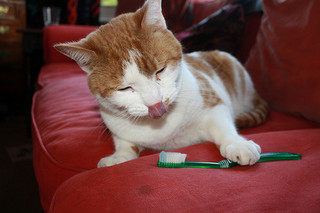
Another key facet of preventative care for cats ismaintenence of your pet’s dental hygiene – though it is often overlooked by pet owners. The process of taking care of your cat’s teeth and gums is relatively simple: with a small toothbrush and a pea-sized drop of toothpaste that is specially formulated for your cat’s mouth, gently massage the teeth and gum areas to remove plaque and any other buildup. Cats that are more finicky about the process of having their teeth brushed often can substitute crunchy dental health treats, designed to remove plaque as cats eat, for their brushing routine. Frequently serving crunchy dry food to your cat can also reduce the risk of buildup forming inside its mouth.

Achieving Regular Activity: Both Play and Exercise Are Critical to Cat Health
Nails
It is very important for cats to have access to toys and enough space for adequate play each day. Surely, stereotypes tell us that cats are fat, lazy, and lounge around all day – and veterinarians agree that it is healthy for cats to have relaxation time as well. However, play can help build the strength of your pet’s muscles, and staying active can prevent troubles with your cat’s joints and ligaments over time. It is far easier for active cats to maintain a healthy weight through engagement in exercise than simply through calorie restriction.

A Nutritious Diet: A Central Part of a Cat’s Healthy Lifestyle
Perhaps the most important part of a pet’s preventative care routine is the maintenance of a healthy, balanced diet. A cat should have a daily diet of healthy cat food. The ideal cat food brand has a high level of animal proteins, and is chock-full of vitamins and minerals that promote your cat’s health. Look for trusted brands that, unlike generic brands, have certification stamps of their safety, and use meats, carbohydrates, and other ingredients that are natural and of high quality. Access to a fresh bowl of clean water is also a key part of maintaining bodily health for a cat.  Get FREE Shipping on orders of $49 or more. Valid within the contiguous 48 U.S. states and to military APO/FPO addresses! Offer Ends Soon! Click here

Did you know that over 54% of the cat population in the United States is overweight? Veterinarians warn that extra weight is an early indicator of disease, and can lead to kidney failures, heart disease, and other kitty illnesses over time. Weight management is based in part on portion control, but also depends upon the food’s nutritional quality. For more information about what your pet’s particular dietary needs are, consult your veterinarian.

Friday, February 26, 2016

How to Save at Petsmart with Petsmart grooming coupons 2016

If your family includes a few furry members, you know just how expensive pets can be. With food, toys, grooming supplies and more, pet expenses can add up quickly. Fortunately, there’s a myriad of tools available such as member rewards, coupons and even free treats on your pooch’s birthday to help ease the burden of those high costs.

Birthday Treat

If you tend to make a bigger deal out of your pet’s birthday than your own, you probably enjoy treating them to something special on their big day. Luckily, PetSmart offer you and your furry friends a surprise on their birthday! At Petco, simply sign up for the Birthday Club by letting them know your pet’s name, pet type and their birthday. When their special day comes you’ll receive a message with special savings! At PetSmart, the birthday treat is one of the perks of their rewards program so as long as you signed up for PetSmart’s PetPerks, you’ll receive a coupon for a free treat on your pet’s day!

Rewards Cards

Like many stores, Petco and PetSmart both offer loyalty cards that can help frequent shoppers score even better deals! Petco, which offers the Petco Pals Reward Card, allows shoppers to earn 5% back on every purchase made at Petco. Once you spend $100, Petco will automatically email you $5 in Petco dollars to spend. You can keep track of your spending, as well as print rewards from your account online. In addition to earning rewards, Petco also offers Pals members exclusive discounts, coupons and preferred pricing on numerous products. At PetSmart, the PetPerks Cards offers pet-lovers customized email alerts to let you know when your favorite products go on sale as well as in-store discounts on thousands of items! You’ll also receive members-only online coupons and, of course, that free treat on your pet’s birthday!

Coupons

There’s nothing better to a Petsmart grooming coupons 2016 than stores that offer coupons and, fortunately, PetSmart fall into that category! PetSmart doesn’t feature a round-up of deals, they do offer regular coupon codes which can be found with a quick search online and often include deals such as 15% off $60 or more or $4 off any purchase of $15! In addition to store coupons, both PetSmart and Petco accept manufacturer coupons!

Discounted Gift Cards

If you’d like to save as much as 20% right off the bat when shopping for your pet’s needs, consider purchasing Petco and PetSmart gift cards. 

Get The latest Petsmart Grooming Coupon $10 OFF & Petsmart grooming coupons 2016


Source: coupon4share.com and thekrazycouponlady.com


Friday, January 22, 2016

20 Pet Websites Every Pet Owner Needs To Know

The internet offers a vast array of pet websites. There are so many it can be difficult to tell which will prove useful, but Lifehack can give you a head start. Through the following 20 sites you’ll find web pages catering for healthy, useful, and creative needs which can assist you and your beloved pet. Outstanding? Absolutely.

1. Petsmart

Get the best pet supplies to care for your pet. PetSmart offers quality pet products and accessories for a healthier, happier pet.


Get $5 OFF On Select Varieties Of Hills Science Diet Dry Cat Food. Buy now! Get Petsmart $5 off $25 2016 for saving now

2. Only Natural Pet Store
If you’d like to offer your pet a sustainable, organic food supply then you can try Only Natural. Things are slightly more expensive here, but the quality of products goes up with the promotion of preservative free, sustainable sourced food stuffs. US only.

3. Bring Fido

Taking your pets with you on holiday is becoming an increasingly popular notion. Many hotels are catering for this craze, and you can use Bring Fido to peruse which lodging best suits you and your woof dog.

4. Web Vet

Before madly dashing off to your nearest vet, you can search through Web Vet‘s database for common ailments among animals. What could be a simple issue easily treated can save you time and money, and the site can provide additional information on how to care for your pet.

5. Pet University

With articles provided for by scientists, Certified Pet Dog Trainers (CPDTs), University Professors, and numerous animal authors, Pet University is an intriguing site. You can really learn what makes animals tick here, whilst picking up handy tips on what your pets expect from you.

6. Cat Lovers Only

A popular community for cat owners, Cat Lovers Only may have an archaic looking site, but they boast 82,000+ Facebook fans and a vast database of cat based information. A must for cat fans.

7. Pet Health Information

Here you can find a huge range of information about various pets. The site is particularly useful for anyone intending to buy a pet, as you can look up fundamental information you’ll need. Pet Health Information also offers some freebies, such as a free calendar and downloadable gifts and cars.

8. Omlet

This unique site offers all manner of unusual pet food products, gifts, toys, and endless other fun objects. Omlet cater for the more rustic pet owner; you’ll find a large range of products for chickens and beekeeping. For the former you’ll come across some excellent Extreme Temperature Jacket chicken coops, as well as high visibility chicken vests!

9. The Ultimate Hamster Cage

If you’re a hamster fan then you may want to consider upgrading to what looks like the best cage ever. Omlet’s Qute Hamster Cage is something special to behold, which means it comes at a price of £119. It’s split over two levels and, aesthetically, it’s like a living piece of furniture for your house. The Qute opens a window into the world of your hamster’s life whilst promoting fun and cleanliness.

10. Build A Hamster Cage

If you want to skip on the expense of the Qute, you can always try building a cage. The BabblePie blog displays just how very well. With a bit of creative flair, and assembling the right products, you can end up with a fine playground for your rodent friend.

Source: Lifehack.org